


Messages
Messages Text
Texting is one of those phone tasks I expect to work immediately, especially when I am tired, distracted, or using my phone in a hurry. Messages, from Messages Text, takes that straightforward approach seriously. It is a free communication app for SMS, aimed at people who want a focused way to handle ordinary text conversations without turning messaging into a broader social platform.
After spending time with it, my impression is practical rather than flashy: it is most appealing when your priority is opening a conversation, reading it comfortably, and sending a reply with as little friction as possible. Its store summary describes it as fast, secure, and simple, and that basic direction matches the experience better than a feature-heavy pitch would. The important question is not whether it replaces every messaging service, but whether it makes everyday SMS easier for your particular phone habits and abilities.
How comfortably Messages works in everyday use
Readability and navigation come first
The strongest part of a simple SMS application is usually its mental clarity. I do not have to think about feeds, channels, stickers, or a separate social identity before reaching a text thread. That matters when I am checking a delivery update, replying to a family member, or looking for a previous exchange while standing in a queue.
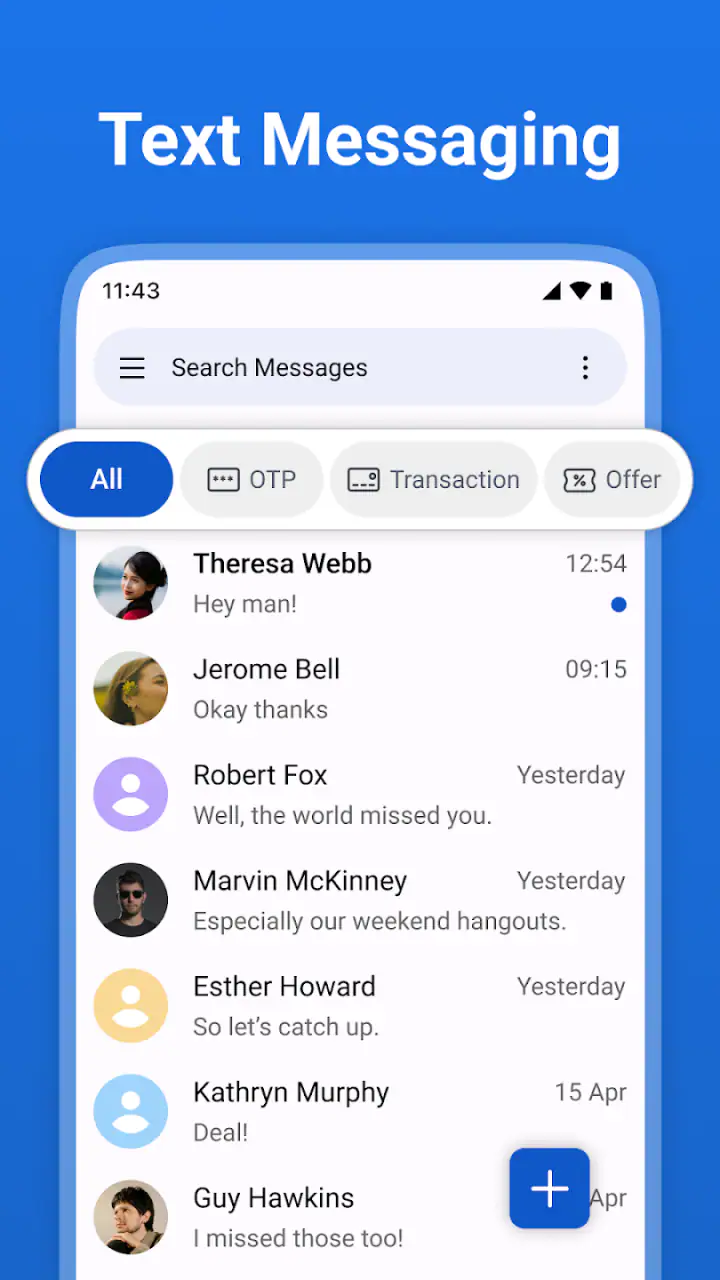
Messages is a sensible fit for people who prefer a conventional conversation list and direct access to their texts. The layout feels more approachable than an app that mixes SMS with several communication services. For someone moving from a crowded interface, that reduced scope can make the first few sessions less tiring. I also found the app easier to understand when my goal was simply to continue an existing conversation rather than discover new content.
Readability is not only about large lettering. It also involves spacing, contrast, predictable placement, and whether a user can tell which thread needs attention. A focused text app has an advantage here because it does not need to compete with unrelated cards or promotional sections. Still, the exact comfort of the interface depends on the phone’s display settings and the user’s vision. Anyone who relies on a very specific font, contrast mode, or magnification setup should test those settings with the app before making it the default.
Related News

Instagram Is No Longer a Photo App. It Is an Attention Engine

Microsoft Teams Mobile: When Collaboration Becomes Navigation

How the NFL App Adapts to Android and iOS Updates

Temu: Elevate Your Shopping Experience to Billionaire Status

Why Traffic Rider Works Best as a Precision Reflex Game

How Google’s Find Hub Transforms Everyday Searches
One useful habit is to keep the conversation list as a working inbox rather than treating it as an archive. I would clear out threads that no longer matter and keep active conversations easy to find. This is especially helpful for users with attention difficulties: fewer visible conversations mean fewer decisions when opening the app. It is a small workflow change, but it can make a basic SMS tool feel much less demanding.
The app has reached over a million installs and holds a 4.2 average from roughly 31 thousand ratings. Those figures suggest that it has found a substantial audience, but they do not tell me whether it will suit every person’s accessibility needs. I would treat that popularity as reassurance that the concept is familiar, not as proof that every screen works equally well for every user.
Motor and sensory considerations
For users with limited dexterity, the main benefit of a dedicated SMS interface is the short path from opening the app to reaching a conversation. Fewer layers can mean fewer taps, and fewer taps can reduce strain. I particularly value that kind of simplicity when I am holding a phone with one hand or trying to respond while carrying something in the other.
Gallery
There is also a trade-off. Text messaging still depends on accurate touch input, so people with tremors, reduced precision, or fatigue may find composing a message more difficult than reading one. The app itself cannot remove the physical demands of typing. A practical approach is to combine it with the phone’s existing keyboard tools, such as voice input or a larger keyboard layout, if those options are comfortable for you. I would not assume that changing the messaging app alone solves motor-access problems.
For sensory-sensitive users, a restrained communication app can be preferable to platforms filled with animated reactions, autoplay content, and constant visual changes. A plain text conversation is easier to scan and less likely to pull attention away from the task. That makes Messages useful in quiet routines, including a short check-in before bed or a quick message during a break at work.
On the other hand, SMS is not automatically ideal for people who need rich visual or audio communication. A person who depends on images, live video, detailed group collaboration, or expressive media may find a dedicated SMS app too limited compared with a modern internet messenger. I would choose this app for direct text exchanges, not as my only tool for every kind of communication.
Situational access when attention is limited
A realistic example is a caregiver receiving several short updates during the day. In a busier communication platform, those messages might sit beside group notifications, media, and unrelated conversations. With a focused SMS app, the caregiver can open the text inbox, identify the relevant thread, and answer without navigating a larger ecosystem. That does not make the task effortless, but it reduces the amount of information competing for attention.
The same applies to older relatives who are comfortable with texting but do not want another social account. Messages is easier to recommend when the person already understands SMS and mainly needs a less distracting place to read and write. I would set it up during a calm moment, send a test message, and confirm that incoming replies appear as expected before relying on it for important contact.
It can also suit people who use a phone with an older operating system. The minimum requirement is Android 7.0, which gives the app a wider possible reach than software restricted to recent devices. That is useful for households keeping an older phone in service, although performance and visual comfort can still vary by device. The current version is 1.43, so I would check how it behaves on the specific phone rather than assuming that age compatibility guarantees a smooth experience.
Situational access includes moments when the user cannot look at the screen for long. Someone may be walking carefully, dealing with a child, or trying to reply in a noisy place. In those cases, the value of the app comes from keeping the message task narrow. I would avoid composing anything complicated in such conditions and use short, clearly worded replies. For longer messages, waiting until I can sit down and review the text is safer than blaming the app for errors caused by divided attention.
Another overlooked use is a shared household routine in which one person handles practical texts, such as appointments or school notices, while another person handles calls. A simple inbox can make those responsibilities easier to separate. I would still be careful with private conversations on a shared phone and use the device’s normal security settings, because a messaging interface cannot replace good device habits.
Where the simple approach creates barriers
The biggest limitation is that simplicity should not be confused with universal accessibility. A user who needs advanced conversation organization, powerful search, extensive media tools, or sophisticated group controls may outgrow this kind of app quickly. If most of your communication happens through internet-based services, switching to an SMS-focused tool may add another inbox instead of removing complexity.
There is also a difference between secure handling and complete privacy expectations. The store summary presents the app as secure, but I would not interpret that as a reason to send highly sensitive information casually. SMS communication depends on the wider mobile messaging system and the people involved. For confidential conversations, I would choose a service designed around the privacy features I specifically need rather than assuming that a simple interface provides every safeguard.
Users who depend on assistive technologies should test the complete workflow: opening a thread, moving between messages, focusing the compose field, correcting text, and sending. A screen can look uncluttered while still being awkward with a particular access method. I would also test incoming notifications and any phone-level spoken feedback that I rely on, because the practical experience includes the operating system as well as the app.
People with cognitive disabilities may appreciate the narrow purpose, but they can still encounter uncertainty around message status, unfamiliar contacts, or accidental taps. My advice is to create a small routine: open the app, select the named conversation, read the latest message, and pause before sending. Using saved contacts with recognizable names can reduce the risk of replying to the wrong person. This is not a special feature claim; it is a safer way to use a basic texting tool.
Language and literacy can be barriers too. SMS is concise, but concise does not always mean easy. If a user struggles with spelling or composing under pressure, phone-level dictation, predictive typing, or a trusted contact who can review important messages may help. I would not choose Messages expecting it to provide a complete writing assistant.
How it compares with familiar alternatives
Compared with a manufacturer’s built-in messaging app, Messages is most attractive to someone who wants a separate, straightforward SMS experience and prefers its presentation. The built-in option may remain the better choice if it is already well integrated with the phone, works naturally with the device’s accessibility settings, or gives you controls you use every day.
Compared with internet messengers, this app is less suitable for people who need rich media, large group conversations, cross-device continuity, or frequent voice and video communication. Its advantage is focus: it keeps the center of attention on text messages instead of asking you to manage a broader platform. That can be a genuine accessibility benefit for users overwhelmed by busy interfaces, but it becomes a limitation for users whose conversations are mostly multimedia.
I would also compare it with a carrier or phone-maker option before switching permanently. Test the same short workflow in both apps: find a contact, read a long message, write a reply, correct a mistake, and return to the inbox. The better choice is the one that creates fewer errors and less fatigue, not necessarily the one with the shorter store description.
Who should choose it, and who should skip it
I would recommend Messages to someone who mainly communicates through SMS, values an uncluttered conversation list, and wants a free app with a familiar purpose. It is particularly reasonable for users maintaining an older Android phone, people who dislike social features mixed into basic texting, and families looking for a simple communication option for a relative.
I would skip it as a primary messenger if your daily communication depends on encrypted internet chats, media-heavy groups, advanced search, or accessibility tools that you already know work well in another app. I would also hesitate to switch during an important period, such as travel or a medical appointment, without testing incoming and outgoing texts first. A messaging app is too central to replace casually.
Messages is free and rated for Everyone, which makes it easy to consider for a broad household audience. The developer is Messages Text, and the app was released on July 2, 2023. Those details do not determine accessibility by themselves, but they help place the product: it is a relatively focused communication tool rather than a long-established all-purpose platform.
My inclusive verdict
My final view is that Messages earns its place through restraint. It does not need to be the most powerful messaging option to be useful. For the right person, a direct SMS inbox can reduce visual distraction, shorten the route to a reply, and make ordinary communication feel more manageable. Those gains are especially noticeable when attention, time, or screen tolerance is limited.
The best reason to use it is not the promise of doing everything; it is the possibility of making one common task easier. Before adopting it, I would run a personal accessibility check with real conversations, the phone settings I depend on, and the people I contact most. If reading and replying feel calm and predictable, this free app is a sensible choice. If you need rich media, specialized assistive behavior, or stronger privacy controls for sensitive exchanges, your phone’s existing messenger or a dedicated internet service may be a better fit.
For my own recommendation, I see Messages as a practical option for focused texting rather than a universal replacement. Its 4.2 average and more than a million installs show that many people find the approach worthwhile, while the remaining barriers are a reminder to judge it by your own hands, eyes, attention, and communication habits. That is the fairest way to decide whether this simple SMS app genuinely improves access for you.
FAQs for Messages
What is Messages, and what can I use it for?
Messages is a messaging application designed for sending and receiving text messages, multimedia content, and, on supported devices and networks, enhanced chat messages. After reviewing the app, its main purpose is straightforward communication: you can create conversations, share photos or videos, send voice messages where available, and manage contacts from one place. The exact features may vary depending on your phone, carrier, operating system, and account settings.
Is Messages free to download and use?
Messages is generally free to download or included with many Android devices, but the cost of sending messages depends on the type of message and your mobile plan. Traditional SMS and MMS messages may use your carrier’s texting allowance or incur charges, while internet-based chat features use mobile data or Wi-Fi. Before using it extensively, check your carrier’s rates and the app’s settings to avoid unexpected costs.
Does Messages require an internet connection?
Not every feature requires the internet. Standard SMS messages can usually be sent through your mobile network without Wi-Fi or mobile data, while MMS and enhanced chat functions may require mobile data or an internet connection. During testing, availability depended on network coverage, device compatibility, and carrier support. If a chat message cannot be delivered, the app may offer an option to send it as a regular text message.
Can I send photos, videos, and other files with Messages?
Yes, Messages commonly supports sharing photos, videos, emojis, stickers, and other multimedia content, although the available options can differ between SMS, MMS, and internet-based conversations. Large files may be compressed or limited by your carrier, and sending media over mobile data can consume your data allowance. Review permissions and attachment settings before sharing sensitive content or high-resolution files.
Is Messages safe and private to use?
Messages includes familiar security features such as device-level protection, spam detection on supported versions, contact blocking, and conversation controls. However, privacy and encryption depend on the message type, device, carrier, and whether enhanced chat features are enabled. Standard SMS should not be treated as fully private. Keep your phone protected with a passcode, install updates, and avoid sending highly sensitive information through ordinary text messages.
Pros
- Simple interface makes chats easy to start and manage.
- Supports group conversations for staying connected with several people.
- Message search helps find older conversations quickly.
- Read receipts can show when a message has been seen.
- Contact blocking helps reduce unwanted messages.
Cons
- Some features may depend on your carrier or device support.
- Large group chats can become difficult to organize.
- Read receipts may create privacy concerns for some users.
- Restoring conversations may require a compatible backup.
- Media-heavy chats can use significant storage space.


